
BIRTH PARTNER SUPPORT GUIDE
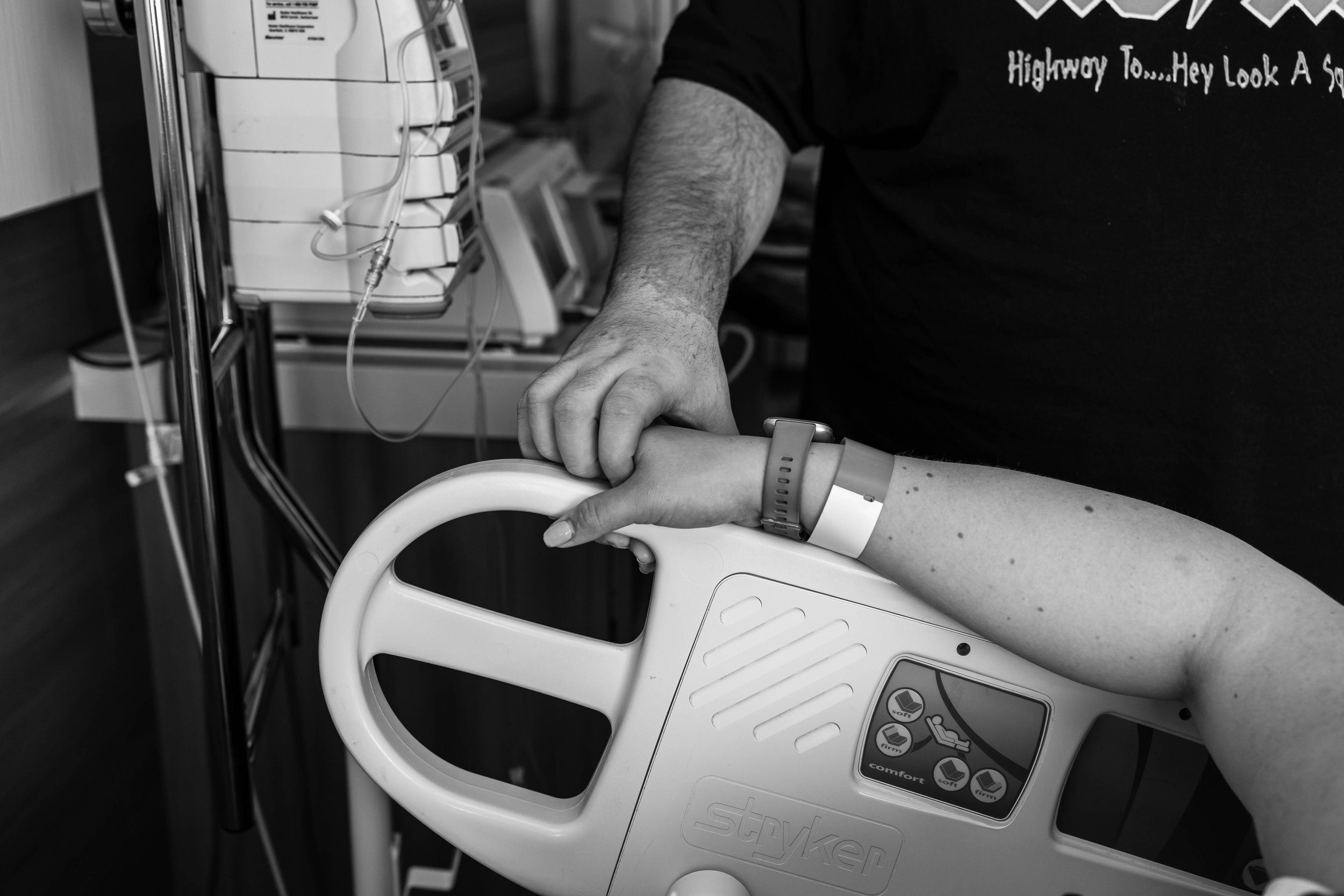
Birth can be overwhelming.
Not just for the person giving birth, but if you’re the designated support person, you may feel a lot of pressure to ensure things go ‘as planned’ with this upcoming birth. The good news? I’m on your side to share that load. The other good news? Everything you need to be a good support person is contained within this course. If you’ve got time, it’s great for you to go through all the information together so that you can be best prepared. Tight on time? Start on this page, and then branch out once you’ve had a chance to absorb this. If you have any questions, don’t be afraid to reach out. I’m there not just for the birthing person, but for you too. Together we can rock this.
Wherever and however you give birth, your experience will impact your emotions, mind, body and spirit for the rest of your life.
Ina May Gaskin
Birth Matters.
Understanding that very basic truth may be the most important thing you can take with you into this upcoming birth. While it’s easy to think of birth as just a means to an end, this will effect both yourself and your partner permanently. Knowing that can feel overwhelming, so I also want to share a positive piece of information — Overwhelmingly, the most important predictor of how a person feels after giving birth, is how supported they were. Did they feel empowered? Did they feel listened to and heard? Did they feel like they understood any options offered to them and felt empowered to choose the best choice for them in that moment?
A positive birth experience is not a checklist of items. It’s an experience where you felt strong, supported, listened to and loved. When you break it down into those components, it’s a lot easier to feel confident offering support effectively. Of course there are physical ways you can and should support your partner, but maintaining their autonomy and feelings of safety and empowerment are the most important gifts you can give.
Before we go further, let’s set you up with some basic information and suggestions. This handout is one of my favourite things to give families. It provides you with not only a base understanding what is happening during each stage of labour, but also gives practical tips that you can use to help her through it with positivity.
Print a copy of this cheat sheet and keep it handy - I recommend leaving it on your dresser or fridge until you need it. Review it a few times throughout these upcoming weeks so that it feels familiar.
As a reminder…
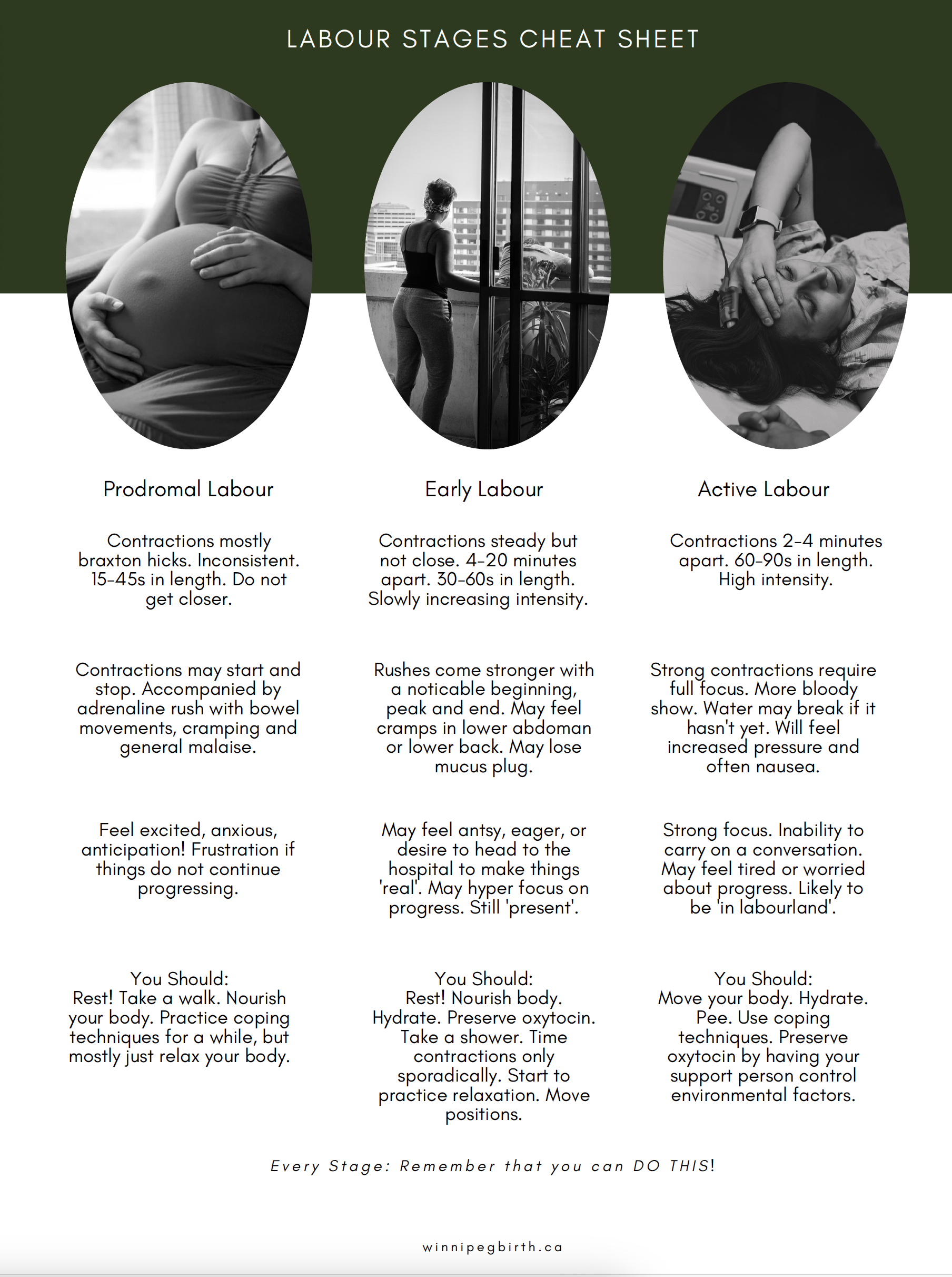
Early Labour
Approx 0-5cms | Contractions 4-20 minutes apart, and will be less than one minute long.
At this point she can talk or move through them, but may need increasing focus as they get stronger. Use the tips in the Cheat sheet to protect her oxytocin and comfort level. This is the time for self care, not trying to rush labour.
Active Labour
Approx 5-10cms | Contractions 2-4 minutes apart, and will be more than one minute long.
Active labour will require complete focus and pulling out different tools from our tool box. Continue using the tips from the guide, and if you’re not planning a homebirth, start to make progress towards your birth place.
Now that you understand a bit more about what might be needed during labour, how do you put that into practice?
As you can see from the cheat sheet, most of early labour will be a matter of providing comfort support - anything you can do to help your partner feel safe, cozy and supported are all going to help labour progress. So ensure that you’re offering food, turning the lights down low, anticipating things that may be causing stress, and most importantly, listening. Once we switch into active labour though, your support will likely be a bit more hands on. If you’ve got time, head over to the comfort measures page, and familiarize yourself with some of the options there (I would focus on double hip squeeze and sacral pressure first, and then branch out). If you don’t have time, that’s ok. I’ll demonstrate for you once we’re together.
At some point during labour, it’s likely your partner will feel overwhelmed and may need some help grounding themselves again so they can continue on with their coping techniques. Enter - Take Charge Routine. Bridget demonstrates this below, take a look.
Got another 20 minutes? Bridget continues on with support tips for Birth Partners in the below video.
Again, I’m not a fan of Bridget’s non-inclusive language, but her information is valuable.
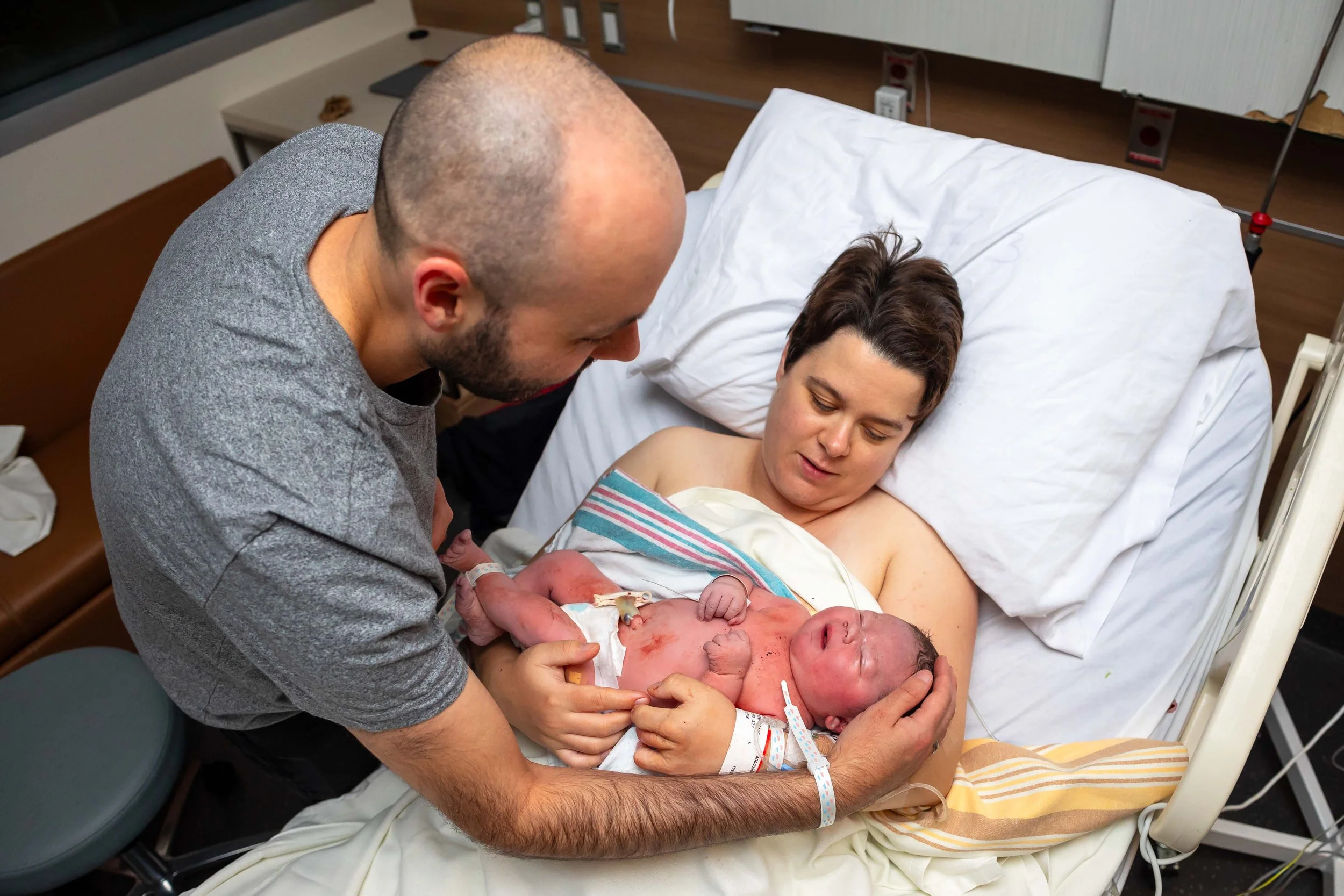
Feeling a little lost and not quite sure what to say? I’ve got you covered.
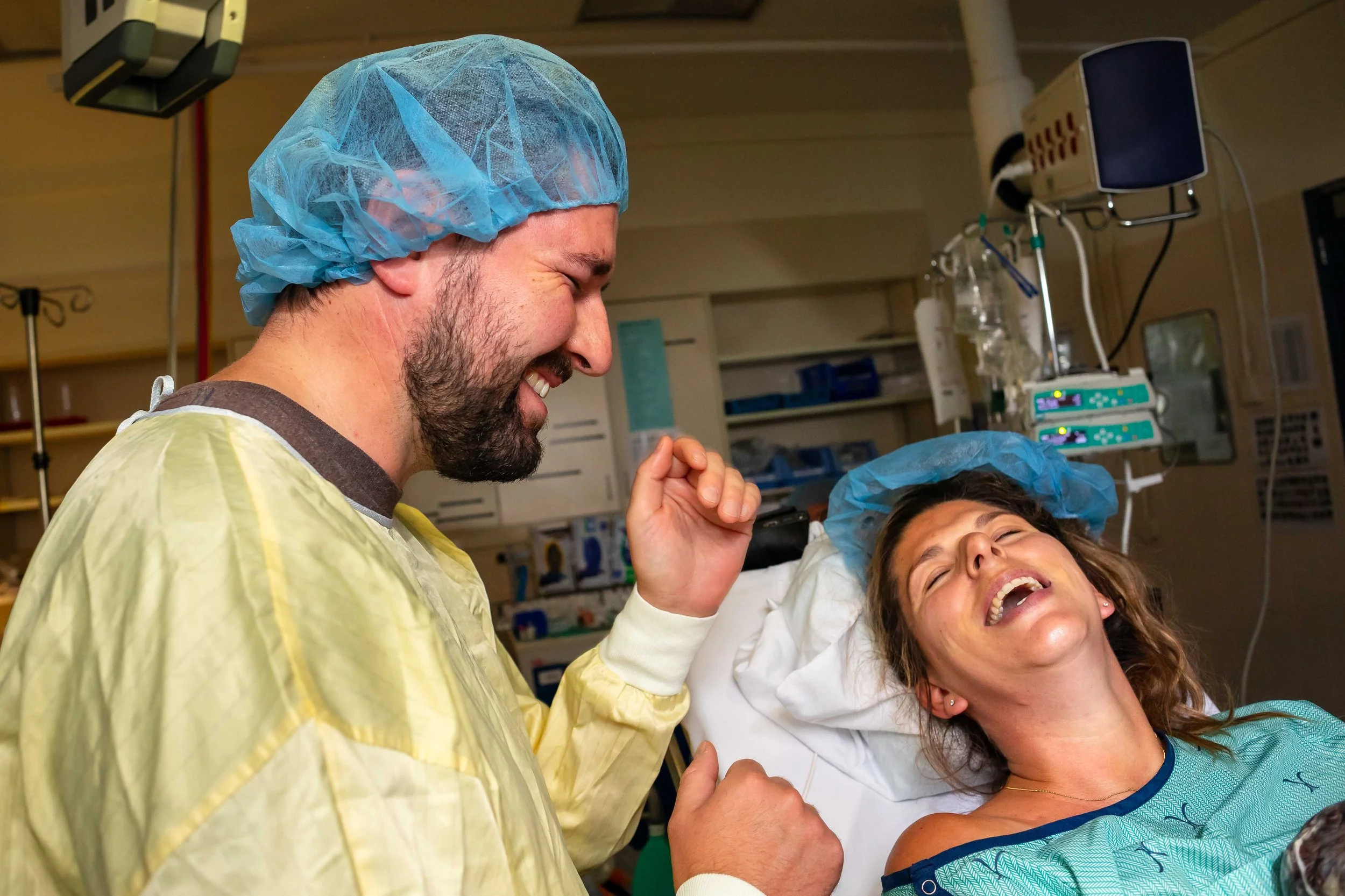
Remember… Empowerment is key.
Physical support is fantastic, and will be so appreciated! But at the end of the day, we want to make sure that birthing person is feeling like they’re in charge and they were listened to and respected. Throughout this labour and birth make sure that you’re validating the experience that is happening, and watching for moments that you can reinforce the amazing job that is being done.
If hospital staff are entering the room and asking questions during contractions, you can ask for a moment so that your partner can finish their coping techniques and then be an active part of the conversation. We want to avoid any situations where things are happening ‘around’ the labouring person, instead of with. If there’s a decision on the table, help to ask questions and work together to choose the option that feels best at that time. Remember that the birthing person may change their mind - that’s ok, and not a failure. Reassurance that this is a good decision can be so important.

When Should I Reach out?
Partners often feel a bit awkward contacting me during labour but remember that my job is to ensure both of you are comfortable and supported. Never hesitate to shoot me a message if something is on your mind.
You have a Question. Even during pregnancy, I’m there to answer questions so you don’t have to rely on Google.
Labour Started and the birthing person isn’t able to reach out. Usually labour starts slowly and I’ll be in contact with your partner early on. But if things start quickly and they’re not able to - send me a message or call so I know to start planning my day.
Things are ramping up. During early labour I will support from home while you guys protect her oxytocin. But sometimes things start to feel serious quickly, and your partner may not be able to message. It’s your turn now!
You’re leaving for your birth place. Please let me know when you leave, and again after you receive a first dilation check.
You need ideas for what to do next. Sometimes you know it’s still early labour and you’re not ready to move to the hospital but you’re also not sure how you can best support your partner. Reach out and we can game plan together based on where things are at and what has or hasn’t been working.
You’re at your birth place and receive any additional progress checks or pain medications. This information is helpful for me to make decisions about when to join you, or if we might need to think or other techniques to try in the meantime.