
PAIN MEDICATIONS
Choosing Pharmaceutical Pain Relief
Whether pain meds were your plan all along, or a new decision, it can be helpful to know all of your options and what the pros and cons of each are. It is common to change your mind about medications during labour, and feeling confident in your decisions and the options that are best for you will go a long way to your overall experience.
Before we dive into your different options, let’s chat a bit about what they will mean for your labour. None of these changes are the end of the world, but they are good things to consider when you look at your next pain relief step.
Mandatory IV Fluids
Depending on your choice of medication, you may be required to have an IV running throughout the rest of your labour. This gives easy access in case they need to give you any other medications (ie anti nausea meds) and also may help to control your blood pressure. Choices like nitrous generally do not require this, and fentanyl and morphine administration will be a case by case basis. Most nurses will want one running if you choose these meds, but some are ok just ensuring they have a “lock” operable. This means they will prep the IV but not hook it up to anything.
Movement Limitations
Choosing pain meds usually means that your movement throughout labour will look different. This does NOT mean that choosing an epidural for instance means you’re stuck completely in bed for the rest of your labour, but it does mean that you may have reduced or more difficult movement, either for a bit while you adjust, or throughout. For something like fentanyl or morphine this may just mean waiting until it wears off and you’re feeling stable. With an epidural it may mean that it’s harder (but not impossible) to change positions easily in bed or get up to go to the bathroom.
Increased Fetal Monitoring
Pain medications usually means your team will want to monitor baby more closely, at least for a little while. This often means that you will have continuous fetal monitoring - two belts will be wrapped around your belly. One measures contractions and the other tracks baby’s heart rate. We want to see that even with the meds on board, baby is still tolerating the contractions well, or if something needs to be adjusted. In some cases after an initial period of monitoring your provider may be ok switching to intermittent monitoring again.

Nitrous Oxide (Gas and Air)
Also called laughing gas, Nitrous is self administered by breathing deeply into the mask during contractions only when you feel you need it. You inhale a mix of nitrous oxide and oxygen, which blocks neurotransmitters to create an anti-anxiety effect. It also releases norepinephrine which decreases pain perception. Essentially you are tricking your brain into thinking it is calm - which can actually be quite effective. It can sometimes make birthers feel dizzy or a bit disoriented and is not the most effective pain medication but is still a good option with very little side effects. It exits the body almost immediately so wears off quickly if you don’t like the feeling, and it can be used at any point in labour. Often even the practice of slowing and focusing on your breathing can be effective pain management.
Nitrous is best suited for birthers who need just a little bit of something extra to take off the edge. It won’t be as effective as an epidural, but can be a great tool if you need help getting through transition only, or relaxing enough to recentre yourself or allow your cervix to dilate that last little bit. It can also help out if you’re waiting for an epidural that is taking a long time to come!

Epidural
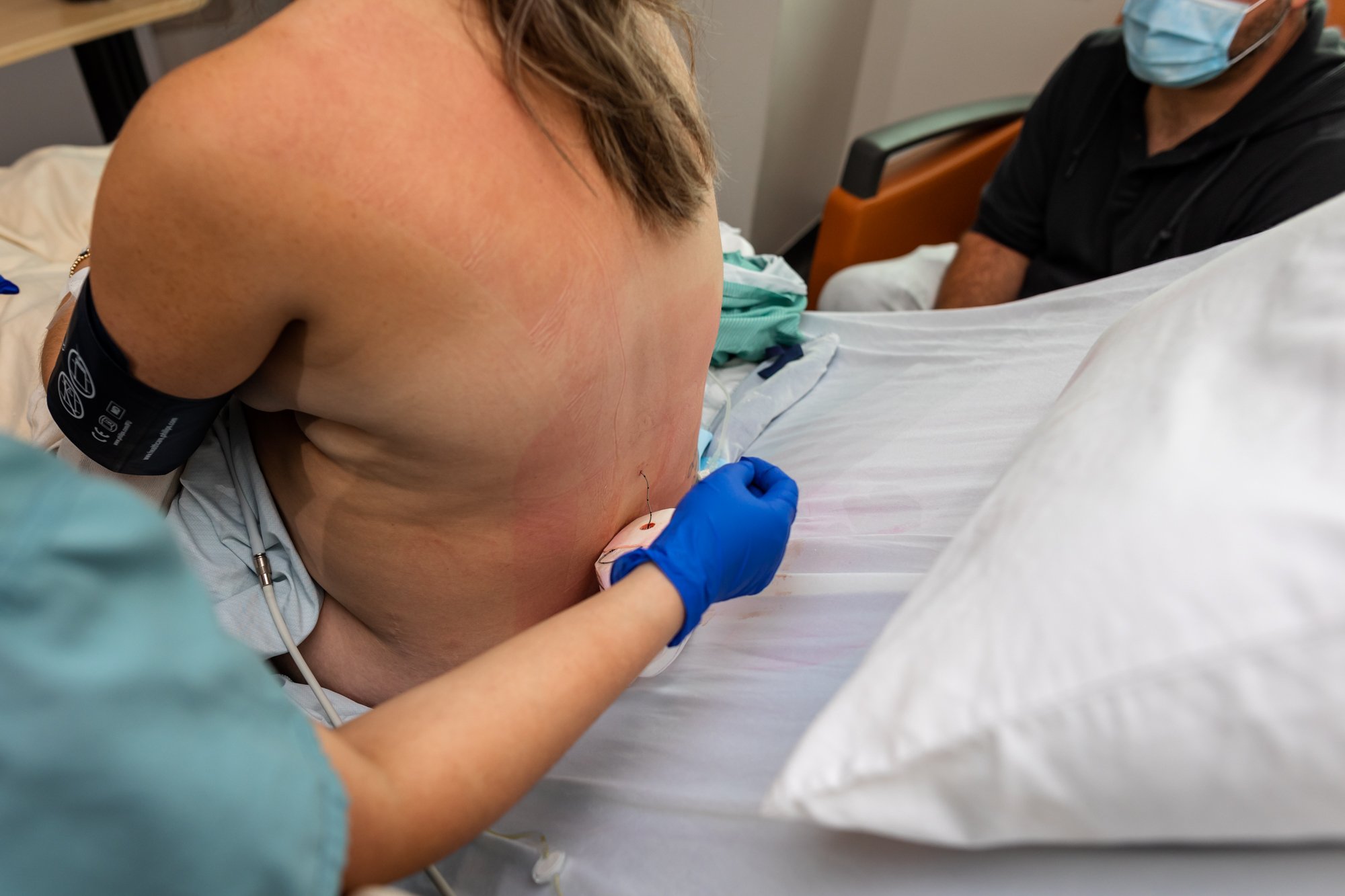
The most common pain medication is an epidural, which delivers continuous medication through a flexible catheter that is inserted into your back and stays in for your entire labour. Epidurals are the most effective, and take full effect within 10-20 minutes. They will last throughout your entire labour and be turned off once baby is here.
Epidurals are safe for baby but can cause fever and changes to birther’s blood pressure which may need further treatment and can increase your chance of a cesarean. If you spike a fever, your team will often treat it like a potential infection, which means baby will be watched closer.
Other common effects are shaking, itching, difficulty pushing and a slightly longer labour if given too early. 5-10% of epidurals may leave an unfrozen patch where you still feel pain. This is why it’s important that you also practice the non medication pain relief techniques we talked about!
A Bit More About Epidurals
We are super lucky here in Manitoba to have fantastic anesthesiologists. This means most epidurals that I see here in Winnipeg are termed ‘walking epidurals’ - the stories you hear on social media about being completely bedbound and unable to move don’t apply here, thankfully! You will need to sit still while it is being administered, but afterwards can move freely; changing positions and sometimes even getting up to use the bathroom as long as you’re feeling stable.
The anesthesiologist will set you up with an ongoing infusion through your epidural catheter. Your nurse will continue to monitor your pain levels, and can request for the epidural to be turned up if needed. Also, you may have access to a “PCA” - or patient controlled anesthesia - essentially while the epidural gives you a continuous amount, you can also bump up your epidural for a short amount of time if you need to get through an extra tough patch.
An epidural somewhat works through gravity - the medication is being sent through your body to specific parts, unlike Nitrous or narcotics which effect your whole body. This means that if you spent a lot of time in one position, say on your side, or sitting up, then the epidural medication may drift out of that spot, leaving you to feel things a bit more. We will keep track of this and change positions as needed.
What if it’s too late to get an epidural? Don’t worry, this is (mostly) a myth. The only reason it’s too late to get an epidural is if baby will be here before we can get it placed. I have seen epidurals given even when the birthing person is almost fully dilated. As long as you can remain still during the placement, and there’s an anesthesiologist available, then you can get one!
Love this video, and she answers a lot of questions that people tend to have. BUT - remember what I said about our epidurals above - most of them are walking epidurals. For the most part, once things have settled after your epidural, you will be able to get up and go to the bathroom, should you wish. If not, normally they will place the temporary catheter that she mentioned - a ‘straight cath’. You shouldn’t feel it, and it’s in only long enough to empty your bladder and then move on. Aside from the bathroom, you can also get out of bed in order to sit on a birthing ball, or sway beside the bed. In the bed, you most likely will have the ability to change positions, move to hands and knees and move your legs with only minor weirdness!
Fentanyl / Morphine
These options are narcotics and are administered through an IV or intramuscular and can provide significant pain relief, especially in early labour. Like Nitrous, these medications effect your whole body, and interrupt pain messages to your brain, but will not take it away completely. Fentanyl is quicker and shorter acting, typically giving relief within 4-5mins and lasting about 45mins. Morphine will take 5-10 minutes to take effect, but often lasts 3-4 hours. Both options may make you feel tired, disoriented or nauseous, and are often given with gravol in order to counteract this.
Both of these may cause lower heart rate or respirations in the baby at birth- if taken within 2-4 hours of birth, you will typically need a neonatal team present at the birth. For this reason, they are typically only offered if we know that delivery is a ways away.
One good use of these medications is when you are awaiting an epidural but an anesthesiologist is not available, or if you’ve had a prolonged early labour and just need a nap before continuing to cope unmedicated or make your next decision.